Scientific Research & Nanocarrier Concept for Endometriosis
A literature-based, conceptual targeted-delivery approach
Academic / Biomedical Research
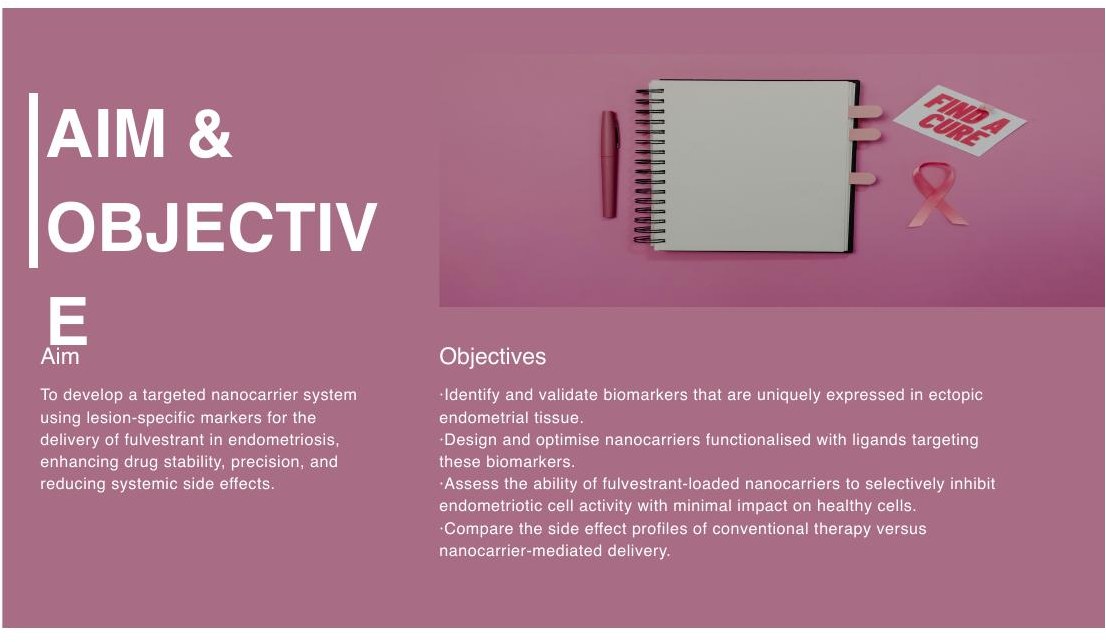
An academic group research project examining endometriosis as a pharmaceutical problem area and developing a research-based nanocarrier concept exploring a potential targeted approach, grounded in cellular biology and the scientific literature.
- Academic group research project.
- Conceptual research — not clinically validated, not a treatment, and not tested in any laboratory or clinical setting.

01 — The Problem
Endometriosis is a common condition in which tissue resembling the endometrial lining develops outside the uterus. Existing management approaches are limited, and systemic treatment affects tissue that is not the intended target.
02 — Objective
Explore, from the literature, whether a nanocarrier-based delivery concept could support a more targeted pharmaceutical approach — focused on interaction with enzymes and pathways associated with the abnormal tissue processes involved in the condition.
03 — Approach — what I did
- Selected endometriosis as the problem area on the basis of prevalence and the limitations of current management.
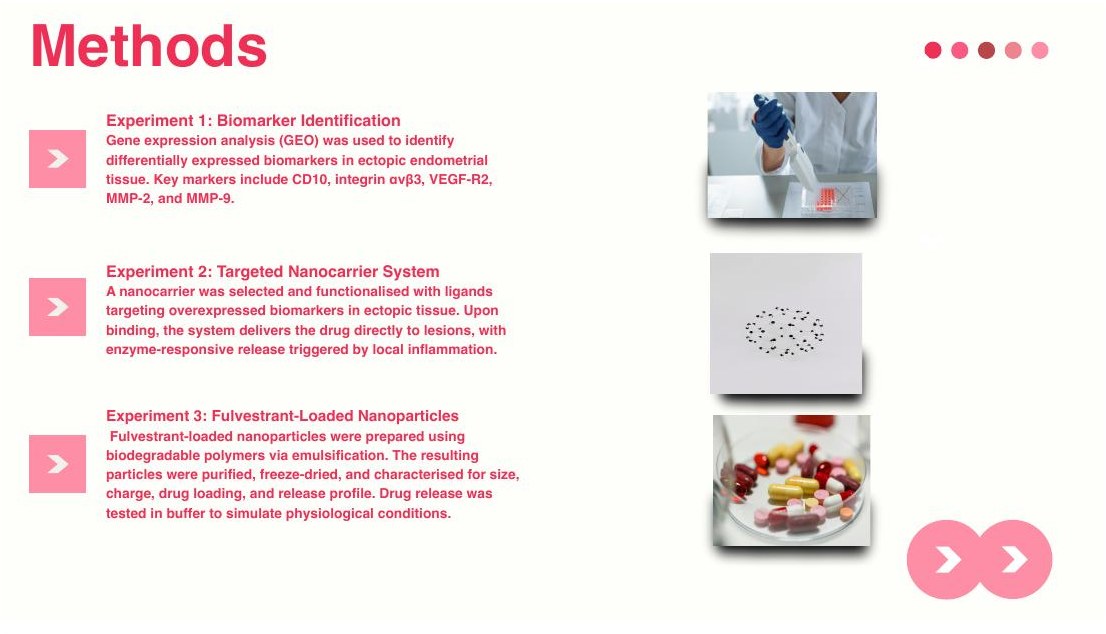
- Reviewed scientific literature on the condition, on the relevant cellular biology, and on nanocarrier delivery systems.
- Framed a research question around targeted delivery rather than systemic administration.
- Developed the nanocarrier concept and its cellular-biology rationale from the reviewed literature.
- Presented the concept, its supporting literature and its limitations as a group.
04 — Tools used
05 — Process
06 — Output
- A group research presentation covering the problem, background, proposed approach, supporting literature and limitations.
07 — What I learned
- How to build a research argument from literature rather than assertion.
- How to keep the boundary between a proposed concept and demonstrated evidence explicit.
- How to present technical scientific reasoning to an audience.
08 — Limitations
- The concept is theoretical. It was not synthesised, not tested in vitro, not tested in vivo and not evaluated in any clinical setting.
- No efficacy, safety or delivery performance has been demonstrated. No experimental data was generated.
- This was a group project. Individual contribution is not documented in the available material and is therefore not claimed here.
09 — Skills demonstrated
10 — Project evidence
The group research presentation is the primary evidence source for this project. Slides from that presentation are shown on this page and the full presentation is downloadable below. No experimental results are reproduced, because none were generated.